How to Tell If Your Knife Is Dull

February 4, 2026

Share this article

It’s a common belief that a sharp knife is a dangerous one, but the opposite is true. In reality, the most dangerous tool in your kitchen is often the one you’ve grown comfortable using, a dull knife. Because knives lose their edge gradually, most people don’t realize it’s happening. You adapt without noticing, pressing harder, sawing instead of slicing, and compensating for a blade that is no longer doing its job.


For homeowners and cooks in Jacksonville, Florida, this problem is even more common. Coastal humidity, frequent seafood preparation, and regular kitchen use can cause knives to dull faster than expected. If you’ve struggled to slice a tomato cleanly or noticed your hand tiring during meal prep, your knife is likely underperforming.


The good news is that you don’t need to be a professional chef to spot the warning signs. This guide will show you simple, reliable ways to tell if your knife is dull. Before replacing a blade or booking professional knife sharpening in Jacksonville, these quick tests will help you understand exactly what’s happening at the edge. Recognizing dullness early makes cooking safer, easier, and far more enjoyable.

What Does “Dull” Actually Mean for a Knife?

When we describe a knife as “dull,” we often think of it as a simple on-or-off condition. In reality, sharpness exists on a spectrum, and most knives become dull long before they completely fail to cut.


A sharp knife edge is formed when two planes of steel meet at a precise, razor-thin point. This microscopic edge allows the blade to separate food fibers cleanly with minimal pressure. Instead of crushing ingredients, a sharp knife slices through them effortlessly, producing cleaner cuts and better control.


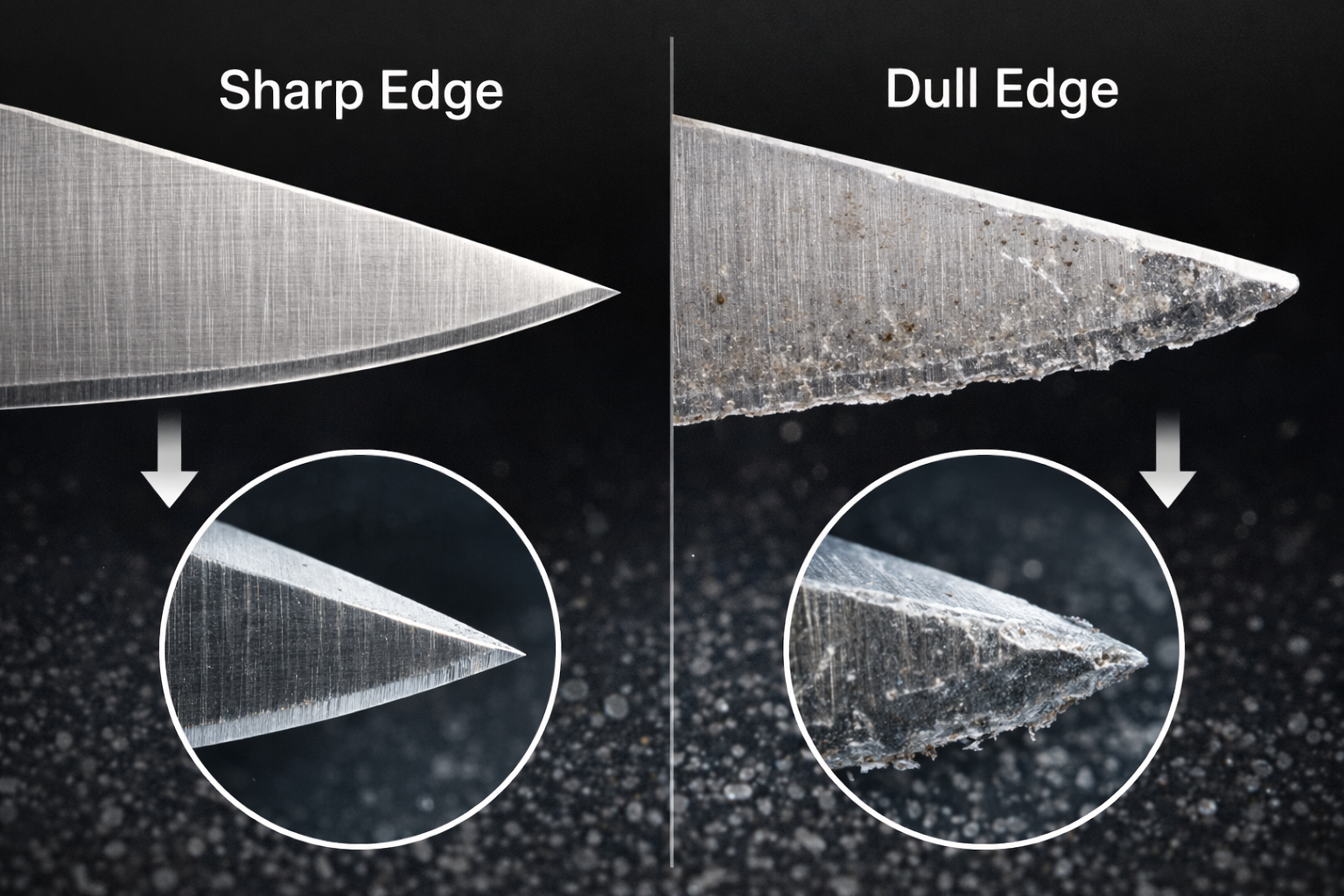
Over time, that perfect edge begins to deform. Rather than remaining straight and centered, the steel bends, rolls, or breaks down at a microscopic level. This gradual damage is what we experience as dullness.

The Microscopic Breakdown

At a microscopic level, dullness is caused by deformation of the blade’s edge. In many cases, the edge rolls slightly to one side, similar to a thin piece of foil bending over. This is known as a rolled edge, and it prevents the knife from making direct contact with food.


In other cases, tiny fragments of steel chip away from the edge. These micro-chips create a jagged surface that slides across smooth foods like peppers or tomatoes instead of biting into them. Without a focused point of contact, the knife loses precision and control.

The Myth of Sudden Dullness

One of the biggest misconceptions about knives is that they go dull suddenly. In reality, steel degrades gradually. Every cut, every contact with a cutting board, and every accidental tap against bone or hard surfaces places stress on the edge.


Because this wear happens slowly, most people adjust their technique without realizing it. You press harder. You use a sawing motion. By the time you search for knife sharpening near Jacksonville, your blade has often been underperforming for months.

Why Honing Isn't Sharpening

Honing and sharpening are often confused, but they serve very different purposes. Honing, typically done with a steel rod, realigns the edge of the blade. It straightens a rolled edge temporarily, improving performance without removing metal.


Sharpening, on the other hand, removes metal to create a new edge entirely. It restores the blade’s original geometry and cutting ability.


A helpful way to think about this is that honing is like combing your hair, while sharpening is like getting a haircut. You can hone frequently, but once the edge is rounded or chipped, honing alone will not restore sharpness. At that point, professional knife sharpening is the only way to properly fix the blade.

The 7 Most Common Signs Your Knife Is Dull

A dull knife may not be obvious right away, but it makes everyday cooking harder and less safe. Here are seven quick ways to tell your blade needs sharpening:


  1. Slips Off Tomato Skins: Instead of slicing cleanly, your knife skids across smooth surfaces.
  2. You Have to Press Harder: Cutting takes extra force, making prep more tiring and risky.
  3. Crushes Food Instead of Slicing: Herbs bruise, bread tears, and delicate foods get smashed.
  4. Uneven or Ragged Cuts: Cuts look jagged or shredded instead of smooth and precise.
  5. Fails the Paper Test: The blade snags or tears printer paper rather than slicing through.
  6. Using a Sawing Motion: You find yourself sawing back and forth instead of slicing smoothly.
  7. Hand or Wrist Gets Tired: Your hand feels fatigued after just a few minutes of chopping.


If you notice these issues, it's probably time to restore your knife’s edge.

Why Dull Knives Are More Dangerous Than Sharp Ones

It may seem counterintuitive, but dull knives are significantly more dangerous than sharp ones. A sharp knife cuts cleanly with minimal force, allowing you to maintain control throughout the motion. A dull knife struggles to penetrate food and is far more likely to slip unexpectedly.


When a blade does not bite into the surface of food, especially items with tough skins like onions or peppers, it can skid sideways without warning. This loss of control is one of the leading causes of kitchen injuries. Many people searching for knife sharpening in Jacksonville, Florida do so after noticing their blade sliding instead of slicing.


To compensate for dullness, you naturally apply more pressure. This reduces stability and increases the severity of injuries when slips occur. A sharp knife may cause a small, clean cut. A dull knife, driven by force, often causes deeper, more traumatic injuries that are harder to heal.


Professional chefs prioritize sharp knives not just for efficiency, but for safety. Fatigue from forcing dull blades leads to mistakes, and mistakes lead to injuries. Sharp knives reduce strain, improve control, and make kitchens safer.

How Long You Can Keep Using a Dull Knife (And Why You Shouldn’t)

You can technically keep using a dull knife for as long as you can stand the frustration. But forcing a blunt tool to do a job it's no longer designed for comes at a cost—not just to your ingredients, but to the knife itself. Pushing a blade past its effective lifespan doesn't save you money or time; it actively shortens the knife's life and makes its eventual restoration much more difficult.

The Problem with Continued Use: Blade Lifespan and Micro-Chipping

When a knife is sharp, it glides through food. When it's dull, it relies on brute force. This extra pressure and the sawing motion you adopt to compensate create excessive stress along the blade's edge. Instead of a clean cut, the edge is subjected to repeated, uneven impacts against your cutting board.


This leads to a few destructive outcomes:


  • Micro-chipping: That once-perfect steel edge begins to develop tiny chips and fractures. These are often too small to see with the naked eye but create a jagged, inefficient cutting surface. The knife snags and tears instead of slicing.
  • Rolled Edges: The fine point of the blade can literally roll over on itself, becoming rounded and ineffective. The more you use it in this state, the more pronounced the roll becomes.
  • Accelerated Wear: Forcing a dull blade through tough materials can cause larger, more visible chips or even break off the tip. This is especially true for harder, more brittle steels used in many high-end knives.


Simply put, using a dull knife doesn't just make it duller; it actively damages the steel. What could have been fixed with a simple sharpening session now requires more significant repair work, removing more metal from the blade and ultimately shortening its usable lifespan.

The Long-Term Cost of Neglect

Neglecting a dull knife is a classic example of "pay now or pay much more later." The longer an edge is left in poor condition, the more metal must be ground away to re-establish a proper, stable cutting bevel. This process, known as re-profiling, is more intensive and costly than routine sharpening. If neglected for too long, a blade may become so damaged that it can't be fully restored, leaving you with a compromised tool.


Think of it like the tires on your car. If you neglect a slow leak, you might end up damaging the wheel rim, turning a simple patch job into a much more expensive replacement.

Replacement vs. Sharpening: A Clear Choice

Many people assume a dull knife is a "dead" knife and start shopping for a replacement. For any decent quality blade, this is a costly mistake.


  • Sharpening restores the existing blade, preserving the quality steel you already paid for. It's a maintenance task, like changing the oil in your car.
  • Replacing a good chef's knife can cost anywhere from $50 to over $200. Professional sharpening, by contrast, is a small fraction of that price.


A well-maintained knife can last for decades, serving you through thousands of meals. Regular sharpening doesn't just make your current cooking safer and more enjoyable; it is the single most important factor in ensuring the longevity of your investment. By catching dullness early, you prevent the micro-damage that leads to costly repairs and premature replacement.

When It’s Time to Book Professional Knife Sharpening

There are a few clear signs that it’s time to leave sharpening to the pros. If you notice several signs of dullness—like slipping, crushing food, or using extra effort—your knife’s edge is beyond what at-home honing can fix. Expensive or specialty knives, serrated blades, or any knife with chips or visible damage should always be handled by a professional to avoid further harm.

Sharp Knives Make Cooking Safer and Easier

Dull knives are easy to overlook, but the consequences add up quickly. Reduced performance, increased fatigue, and higher injury risk all stem from an edge that has been allowed to degrade for too long.


Jacksonville’s climate and cooking habits can dull blades faster than many people expect. Learning to recognize the signs early protects your investment and keeps your kitchen safer. If your knife shows any of the warning signs above, professional knife sharpening in Jacksonville can restore precision, safety, and ease to every cut.

About Finest Edge Florida

Finest Edge Florida is Jacksonville’s trusted professional sharpening service, specializing in precision sharpening for knives, shears, and clipper blades. Serving both residential and commercial clients across Duval County, we combine expert craftsmanship with convenient pick-up and delivery to ensure your tools perform at their best. Whether you’re a home cook, a restaurant chef, or a professional barber, we’re here to provide consistent, reliable results that protect your investment and keep your tools sharp, safe, and long-lasting.


To schedule your sharpening, call or text us at (904) 467-0223 or schedule sharpening service online. Let us help you achieve the finest edge—every time.

Recent Posts

Dog grooming shear sharpening in Jacksonville, FL with pickup and delivery from Finest Edge Florida
By Rodney Valdes February 26, 2026
Dog grooming shear sharpening in Jacksonville Beach, FL with pickup & delivery. Same-day or next-day turnaround. Book FinestEdgeFL.com.
Professional chef knife on cutting board after knife sharpening in Jacksonville, FL
By Rodney Valdes February 14, 2026
Jacksonville knife sharpening guide kitchens, barbers, groomers, hunters, and chefs. Learn when and why professional sharpening matters.
Professional knife sharpening in Jacksonville using a belt grinder to restore a sharp kitchen knife
By Rodney Valdes January 23, 2026
How often should you sharpen kitchen knives? Learn expert tips for knife sharpening in Jacksonville and when to choose professional sharpening services.
Close-up of various silver barber shears in a row, on a dark surface.
By Nat Lopez January 4, 2026
Are dull shears cutting into your profits? Discover how using unsharpened tools impacts salon efficiency, client satisfaction, and revenue in Jacksonville.
Hands sharpening a knife on a sharpening stone, with the blade at an angle.
By Nat Lopez January 4, 2026
Are you making these common knife sharpening mistakes at home? Learn the top 10 DIY errors and why professional sharpening is a safer, better choice.
Person sharpening a shear on a whetstone. Dark t-shirt, indoors.
By Nat Lopez January 4, 2026
Thinking of sharpening your own shears? Discover the critical differences between DIY methods and professional shear sharpening services in Jacksonville.
Hands applying lubricant to a hair clipper blade on a wooden table.
By Nat Lopez January 4, 2026
Learn essential clipper maintenance tips to keep your tools running smoothly. Discover cleaning routines, oiling hacks, and when to book professional sharpening.
Knives on sharpening stones with cash and money symbols, suggesting a culinary investment.
By Nat Lopez January 4, 2026
Learn how much knife sharpening costs, what affects pricing, and when professional sharpening is worth it. See average prices and service options in Jacksonville.
Chef's knife on sharpening stones with oil bottles, tomatoes, garlic, and herbs on a countertop.
By Nat Lopez January 4, 2026
Learn professional knife care tips to keep your blades sharp and safe. Our certified sharpener covers cleaning, storage, and when to get professional service.
Two pairs of barber scissors on a black leather pad; other barber tools and towel in the background.
By Nat Lopez January 4, 2026
Are your shears pulling hair or causing hand strain? Learn the signs that you need professional shear sharpening and maintenance to protect your tools.
Show More