How Often Should Knives Be Sharpened? A Complete Guide for Homes & Professionals

Knowing how often knives should be sharpened is one of the most common questions homeowners, chefs, and business owners ask. The answer depends on how often the knife is used, what it cuts, and whether it’s maintained properly between sharpenings.
In this guide, we break down knife sharpening frequency, warning signs your blade needs attention, and when professional knife sharpening is the smarter choice.
Why Knife Sharpening Frequency Matters
A dull knife isn’t just an inconvenience—it’s a hidden hazard. When blades lose their sharp edge, they demand more force to cut through materials, significantly increasing the risk of slips, mishaps, and potential injuries. On the other hand, a well-sharpened knife glides effortlessly, making every cut precise and controlled.
Regular sharpening offers a host of benefits, including:
- Improved Cutting Performance: A sharp blade ensures clean, efficient cuts, saving time and effort in the kitchen.
- Extended Blade Longevity: Proper maintenance reduces wear and tear, preserving the integrity of your knives for years to come.
- Enhanced Safety and Precision: With less force required, you can work with confidence, minimizing accidents and achieving professional-level accuracy.
- Protection for Your Investment: High-quality knives are an investment, and sharpening prevents unnecessary damage, keeping them in peak condition.
Whether you’re running a bustling commercial kitchen or preparing meals at home, maintaining a consistent sharpening schedule is not just a best practice—it’s a necessity. A sharp knife isn’t just a tool; it’s the cornerstone of a safe, efficient, and enjoyable cooking experience.
How Often Should Home Kitchen Knives Be Sharpened?
For the Average Household:
When it comes to keeping your kitchen knives in top shape, the recommended sharpening frequency is every 6–12 months. However, this timeline can vary based on a few key factors:
- Cooking Frequency: If you’re whipping up meals daily, your knives will dull faster and may need sharpening closer to the six-month mark. For occasional cooks, a yearly touch-up might suffice.
- Cutting Surfaces: The type of surface you use matters. Wooden or plastic cutting boards are gentler on blades, while harder surfaces like glass can wear them down more quickly.
- Storage Habits: Proper storage, such as using a knife block or blade guard, can help maintain your knife’s edge longer. Tossing knives into a drawer? That’s a fast track to dullness.
For home cooks unsure about their knife’s condition, a professional knife sharpening service is your best ally. Experts can assess your blade’s edge and restore it safely and evenly, ensuring your knives are always ready to perform at their best.
How Often Should Professional Chefs Sharpen Knives?
In the fast-paced world of professional kitchens, precision isn’t just a preference—it’s a necessity. For commercial kitchens, the recommended sharpening frequency is every 2–4 weeks.
Why so often? High-volume prep work, from slicing vegetables to breaking down proteins, takes a toll on even the highest-quality blades. Regular professional sharpening ensures your knives deliver consistent performance during service, helping chefs maintain the speed, accuracy, and safety required in a demanding environment.
To keep operations running smoothly, many
restaurants and commercial kitchens
opt for scheduled sharpening programs. These programs eliminate the risk of downtime caused by dull knives and prevent last-minute emergencies that could disrupt service. With a reliable sharpening routine in place, chefs can focus on what they do best—creating exceptional dishes.
How Often Should Restaurant Knives Be Sharpened?
In bustling restaurant kitchens, where knives are in constant use for slicing proteins, chopping produce, and handling daily prep work, maintaining sharp blades is non-negotiable. To keep up with the demands of a high-volume kitchen, a two-step approach is essential:
- Weekly Honing: Regular honing helps realign the blade’s edge, keeping it sharp and functional between professional sharpening sessions. This quick maintenance step is crucial for preserving performance during busy service hours.
- Monthly Professional Sharpening: Despite regular honing, knives will eventually lose their edge. Scheduling professional sharpening every month ensures your blades are restored to peak condition, ready to tackle the toughest prep tasks with ease.
Many restaurants rely on commercial knife sharpening services that offer convenient pick-up and delivery options. These services not only save time but also ensure that your kitchen operates smoothly without interruptions caused by dull knives. With a consistent maintenance routine, your team can focus on delivering exceptional dishes, one perfectly sliced ingredient at a time.
How Often Should Butchers Sharpen Knives?
No industry puts knives to the test quite like butchery and meat processing. The aggressive and repetitive nature of cutting through tough proteins, bones, and sinew dulls blades at a rapid pace. For these professionals, maintaining sharp knives isn’t just important—it’s critical for efficiency, safety, and precision.
Recommended Maintenance Schedule:
- Weekly or Bi-Weekly Sharpening: To keep up with the demands of heavy-duty use, knives should be professionally sharpened on a weekly or bi-weekly basis. This ensures clean cuts, reduces the risk of accidents, and helps maintain the speed required in high-output environments.
Many businesses in the meat processing industry rely on recurring professional sharpening services. These programs not only keep blades performing at their best but also help reduce long-term costs by extending the life of the knives and minimizing the need for frequent replacements. With sharp tools in hand, butchers and meat processors can work with confidence and precision, delivering top-quality results every time.
Signs Your Knife Needs Sharpening
Wondering if your knives are due for sharpening? Keep an eye out for these telltale signs that your blades are losing their edge:
- Slipping Instead of Cutting: A sharp knife should glide effortlessly through food. If it’s slipping or struggling, it’s time for a tune-up.
- Crushed or Torn Food Edges: Instead of clean, precise cuts, dull knives leave behind crushed or jagged edges, especially on delicate items like herbs or tomatoes.
- Increased Hand Pressure: If you’re finding yourself applying more force to get the job done, your knife is no longer at peak performance—and it’s becoming a safety risk.
- Inconsistent Cuts: Uneven slices or ragged edges are a clear sign that your blade’s sharpness has faded.
- Visible Nicks or Dull Spots: Inspect your knife’s edge. If you see noticeable nicks or areas that have lost their shine, it’s time to take action.
When you notice any of these signs, it’s best to stop relying on honing and schedule a professional sharpening. A sharp knife isn’t just more effective—it’s safer and far more enjoyable to use.
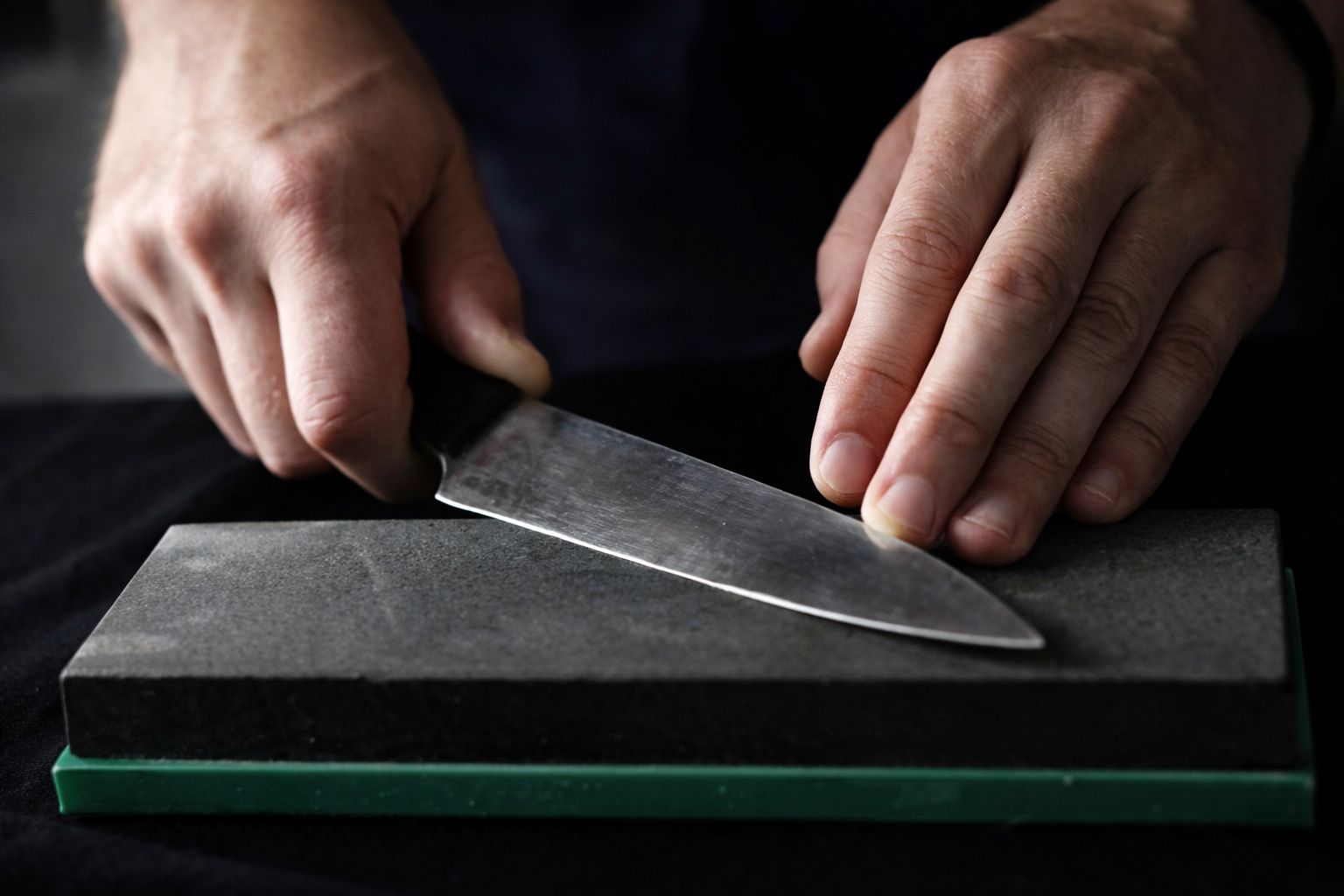
Honing vs Sharpening: What’s the Difference?
It’s a common misconception that honing and sharpening are the same thing. While both are essential for maintaining your knives, they serve very different purposes:
Honing
- Realigns the blade’s edge, keeping it straight and functional.
- Does not remove any metal from the blade.
- Should be done weekly to maintain performance between sharpening sessions.
Sharpening

- Removes a small amount of metal to restore the blade’s edge to its original sharpness.
- Should be done professionally to ensure precision and avoid damaging the knife.
- Creates a longer-lasting, safer edge for optimal performance.
While honing can delay the need for sharpening, it’s important to remember that it does not replace it. Think of honing as routine maintenance and sharpening as the essential reset your knives need to stay at their best.
How Long Do Knives Stay Sharp After Sharpening?
The lifespan of a sharp edge depends on how the knife is used and cared for. Here’s a general guideline:
- Home Knives: Stay sharp for 6–12 months with proper care, depending on how frequently they’re used.
- Restaurant Knives: Retain their edge for 2–4 weeks, as they endure daily, high-volume prep work.
- Butcher Knives: Require sharpening every 1–2 weeks due to the rigorous demands of cutting through meat and bone.
To maximize the longevity of your knives after sharpening, pay attention to:
- Cutting Surfaces: Use wood or plastic boards, as harder surfaces like glass can dull blades quickly.
- Storage: Protect your knives with a blade guard, knife block, or magnetic strip to prevent unnecessary wear.
- Cleaning Habits: Hand wash and dry your knives immediately to avoid corrosion and maintain their edge.
With proper care, you can extend the time between sharpening sessions and keep your knives performing at their best.
Why Choose Professional Knife Sharpening?
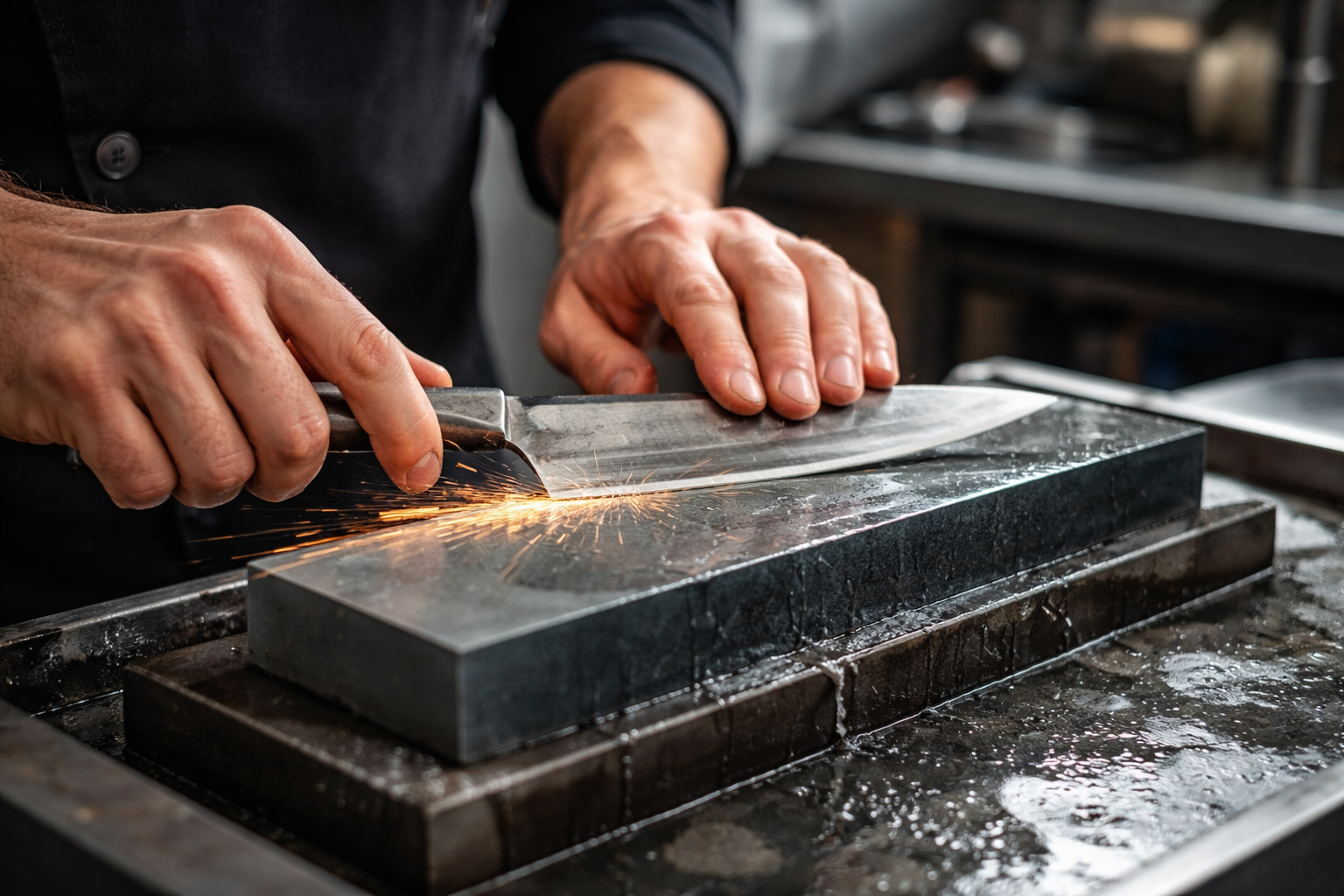
When it comes to maintaining your knives, professional sharpening offers unmatched precision and care. Here’s why it’s the preferred choice:
- Correct Sharpening Angles: Professionals use specialized tools and techniques to ensure the blade is sharpened at the ideal angle for optimal performance.
- Even Edge Restoration: A consistent, even edge is key to a knife’s functionality, and professionals have the expertise to achieve this.
- No Overheating or Metal Damage: DIY sharpening can generate heat that weakens the blade. Professionals avoid this, preserving the knife’s integrity.
- Longer Blade Life: By removing just the right amount of metal, professional sharpening extends the lifespan of your knives, protecting your investment.
While DIY sharpening may seem convenient, it often results in uneven edges, excessive metal removal, or even blade damage. A professional service ensures your knives are handled with care, delivering a sharper, safer, and longer-lasting edge.
For added convenience, many customers opt for pick-up and delivery knife sharpening services, which save time and provide a hassle-free way to keep their tools in top condition.
Knife Sharpening in Jacksonville, FL
For those in Northeast Florida, partnering with a local knife sharpening service offers the advantage of faster turnaround times and personalized care tailored to your needs.
Finest Edge Florida specializes in professional sharpening services for a variety of clients, including:
- Home Kitchens: Keep your everyday cooking tools razor-sharp for effortless meal prep.
- Restaurants & Commercial Kitchens: Ensure your team has reliable, high-performing knives to handle the demands of a busy kitchen.
- Butcher Shops & Meat Processing: Maintain precision and safety with expertly sharpened blades designed for heavy-duty use.
- Catering Companies & Event Services: Impress clients with clean, precise cuts that elevate presentation and efficiency.
With a commitment to quality and convenience, Finest Edge Florida is your trusted partner for keeping your knives in peak condition.
Final Thoughts: How Often Should Knives Be Sharpened?
When it comes to knife sharpening, there’s no universal schedule—it all depends on how you use your knives. However, the rule of thumb is simple:
- Sharpen Before Performance Drops: Don’t wait until your knives are struggling to cut.
- Match Frequency to Usage: Home cooks, restaurant chefs, and butchers all have different needs—adjust your sharpening schedule accordingly.
- Trust Professionals for Best Results: Professional sharpening ensures precision, safety, and a longer blade life.
Consistent sharpening not only keeps your knives sharper and safer but also extends their lifespan, making them a reliable tool in your kitchen for years to come.
About Finest Edge Florida
Finest Edge Florida is Jacksonville’s trusted professional sharpening service, specializing in precision sharpening for knives, shears, and clipper blades. Serving both residential and commercial clients across Duval County, we combine expert craftsmanship with convenient pick-up and delivery to ensure your tools perform at their best. Whether you’re a home cook, a restaurant chef, or a professional barber, we’re here to provide consistent, reliable results that protect your investment and keep your tools sharp, safe, and long-lasting.
To schedule your sharpening, call or text us at (904) 467-0223 or schedule sharpening service online. Let us help you achieve the finest edge—every time.